Gibson L-00 Century 12-Fret Review — Specs, Tone & Verdict
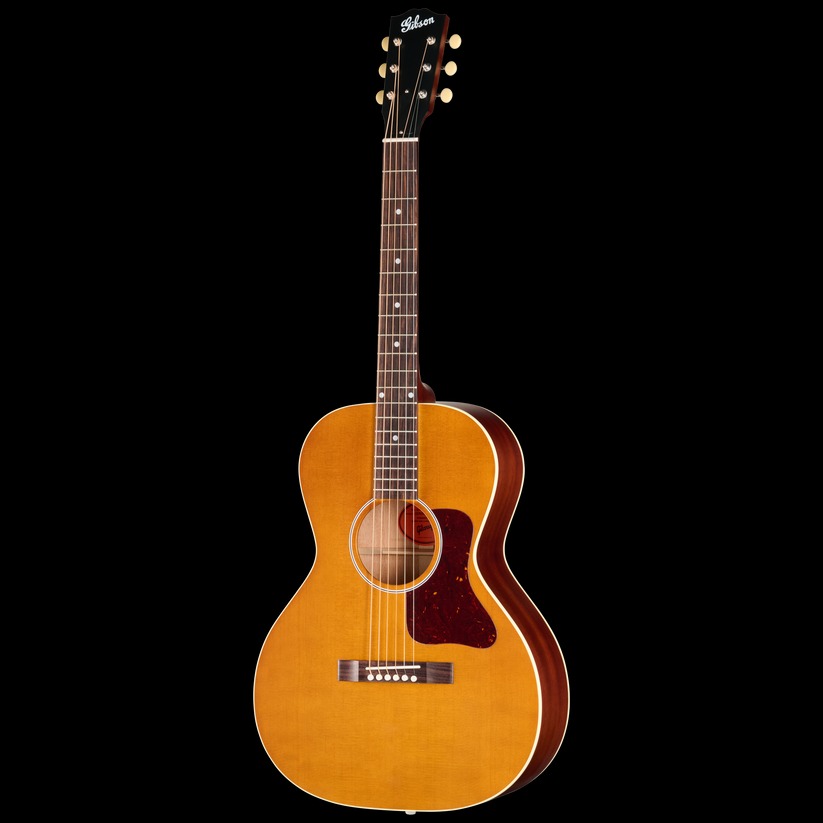
The Gibson L-00 Century 12-Fret is Gibson’s 100-year love letter to the small-body flat-top, and it makes one decision that separates it from every standard L-00 on the wall: the neck joins the body at the 12th fret instead of the 14th. That single change moves the bridge into the most resonant zone of the top, and the result is a warmer, bloomier, more responsive voice than the standard L-00 produces. It is a blues guitar, a fingerpicker’s guitar, and a songwriter’s guitar. It is also $2,299, and it earns most of that. Street price: $2,299.
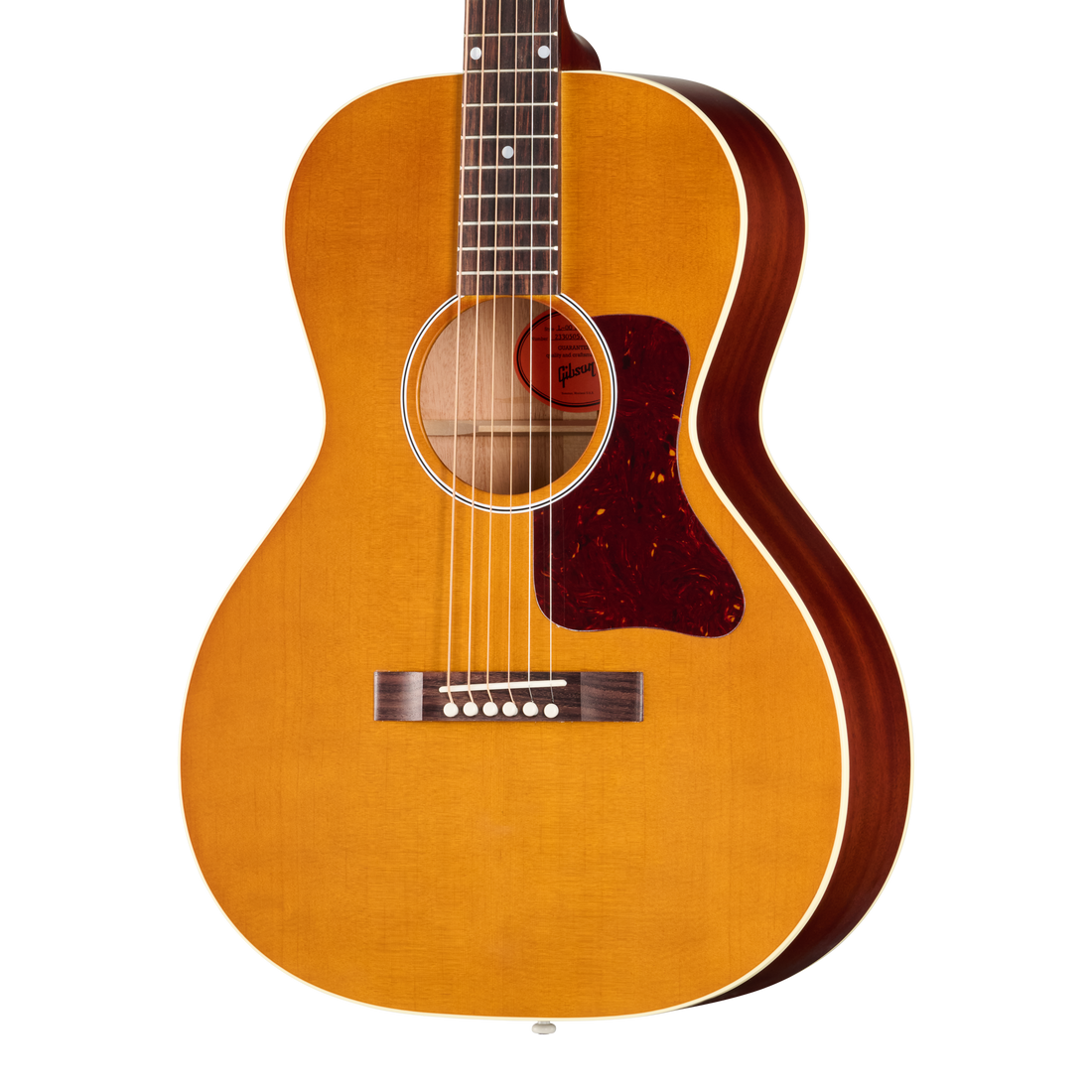
See full specs at the Gibson L-00 Century 12-Fret product page.
SPEC SHEET
MODEL — Gibson L-00 Century 12-Fret
COLLECTION — Gibson Century Collection (100 Years of Flat-Tops)
BODY — Mahogany back and sides
TOP — Solid Sitka spruce
BINDING — Single-ply cream, top and back
NECK — Mahogany, SlimTaper 12-Fret profile
NECK JOINT — Compound dovetail at 12th fret, hot hide glue
FRETBOARD — Rosewood, 19 frets, MOP dot inlays
SCALE LENGTH — 24.75 inches
NUT / SADDLE — Bone
BRIDGE PINS — TUSQ
BRIDGE — Sloped rectangle closed-slot rosewood
TUNERS — Open-back Golden Age, cream buttons
FINISH — Hand-sprayed satin nitrocellulose lacquer
WEIGHT — Approx. 4 lbs
FINISH OPTIONS — Vintage Sunburst, Vintage Amber, Ebony
HANDEDNESS — Right and left
CASE — Century Collection tweed hardshell
STREET PRICE — $2,299
A 100-YEAR-OLD DESIGN, REISSUED CORRECTLY
The Gibson L-00 first appeared in the early 1930s and became one of the most recognized small-body acoustics ever built. Gibson’s own 1934 catalog described the L-Series voice as one of “perfect balance,” and generations of blues players and folk singers proved the point. The L-00 is the guitar you have heard on more pre-war blues and Delta recordings than you can count, and its close relative, the Nick Lucas model, is the guitar Bob Dylan carried through his 1965 acoustic tour.
The Century Collection is Gibson’s centennial celebration of 100 years of flat-top building, and it spans an L-00, a J-45, and a J-185, all with 12-fret necks. Gibson has built 12-fret L-00 models before, but only on the earliest pre-war flat-tops and in rare limited runs. This is the first time the 12-fret configuration has shipped as a standard, catalog-available L-00. That matters, because the 12-fret voice is not a cosmetic throwback. It is the reason this guitar exists.
WHAT THE 12-FRET JOINT ACTUALLY DOES
Here is the mechanism, not the marketing. Moving the neck-to-body joint from the 14th fret to the 12th shortens the neck section and shifts the entire bridge plate further from the waist and closer to the widest, most active part of the lower bout. That relocation lets the soundboard move more efficiently. More top movement means more air pushed, and the tonal result is a warmer low end, a livelier midrange, and a faster, more articulate response to a light touch.
Players who A/B the Century against a standard 14-fret L-00 hear it immediately: the low end blooms where the 14-fret version stays tighter and more controlled. On a parlor-sized body, that shift is the difference between a guitar that sounds small and a guitar that sounds like it is punching a full size above its footprint. Gibson VP of Product Mat Koehler put the design brief plainly: deeper-set 12-fret necks for reach, bridge placement in the heart of the soundboard, featherweight bracing, and thin nitro. On the evidence of this guitar, they hit the brief.
TONE AND VOICE
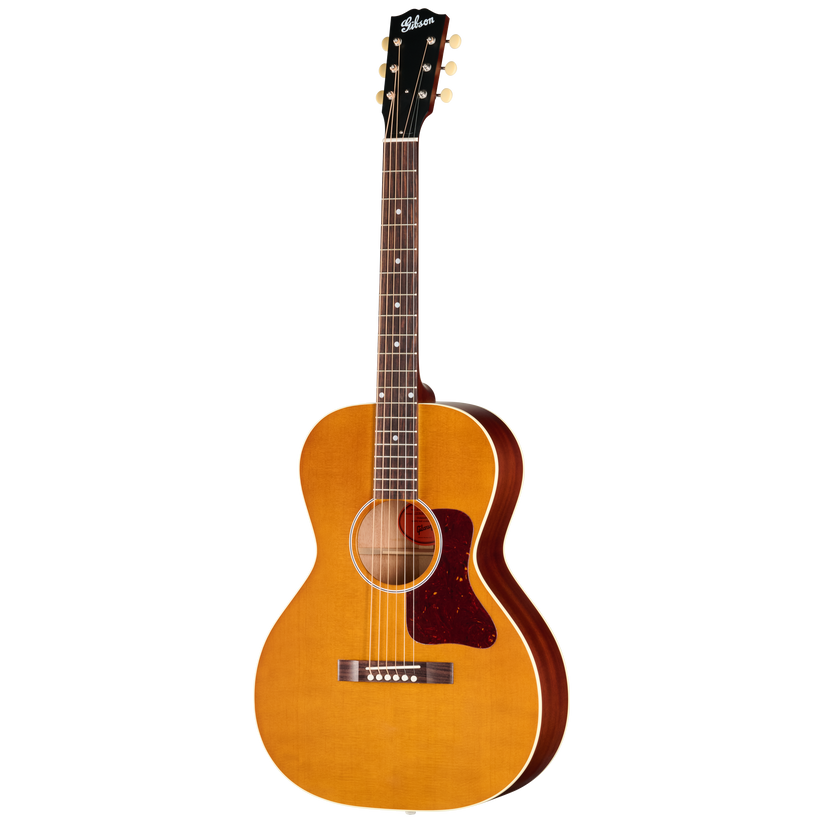
The L-00 Century is tight, punchy, and present, with the distinct honky midrange the L-00 has always been known for and a fast percussive attack that reads every fluctuation in your picking hand. It is not a loud guitar. It does not have the projection or headroom of a dreadnought or a J-45, and it is not trying to. What it delivers instead is intimacy and immediacy: play it softly and it blooms, dig in and it stays clear instead of compressing into mush.
This is one of the best-suited production acoustics for blues fingerstyle and fingerpicked chord melody at any price. The natural high-mid compression, the woody fundamental, and the 12-fret low-end bloom combine into a voice built for exactly the kind of country blues, ragtime, and solo acoustic material the original L-00 made its name on. For players chasing that blues tone on an acoustic, this is the starting point.
PLAYABILITY AND BUILD
The SlimTaper neck is substantial without being a club, and the short 24.75-inch scale plus low factory action make everything from open-chord strumming to upper-fret fingerpicking feel easy. At roughly 4 lbs, the featherweight construction is central to the appeal. This is the guitar you pick up meaning to noodle for ten minutes and put down two hours later.
Materials are traditional and correct: mahogany back and sides, solid Sitka spruce top, compound dovetail joint set with hot hide glue, the same construction across Gibson’s acoustic line. Hide glue is stiffer and more tonally efficient than modern adhesives, which matters more on a small top than a big one. The thin hand-sprayed satin nitrocellulose finish lets the top move freely and will check and wear the way nitro is supposed to. That is a feature, not a flaw.
One honest flag: at this price, independent reviewers have noted slightly sharp fret ends, specifically around the third fret. It is a five-minute fix for any competent tech, but Gibson QC should catch it before a $2,299 guitar ships. Inspect your specific instrument in-store, or within your return window if you buy online.
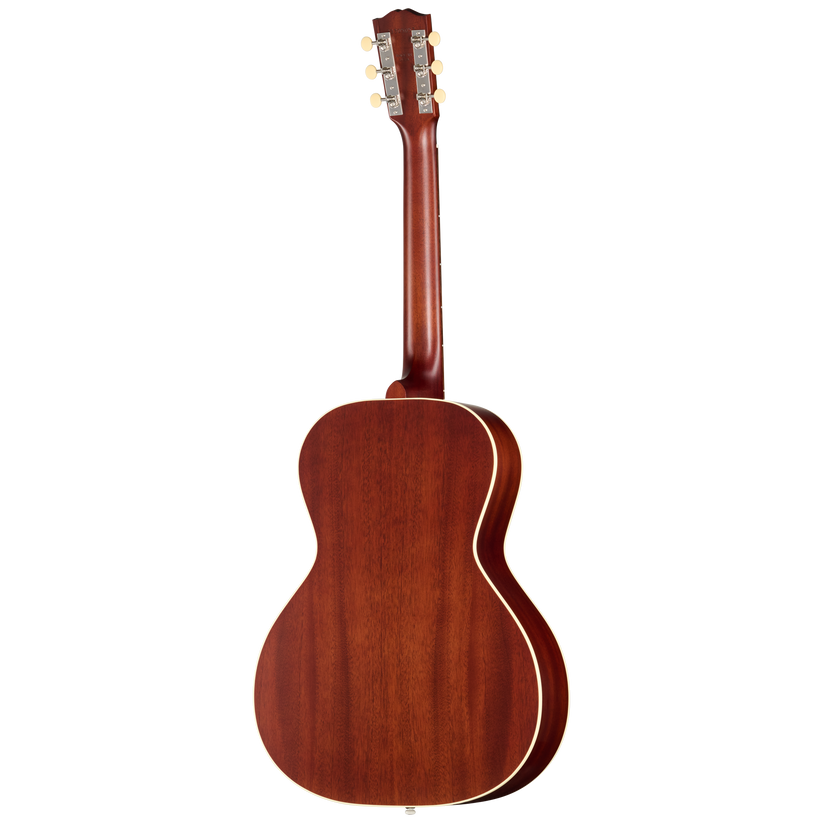
THE THREE FINISHES
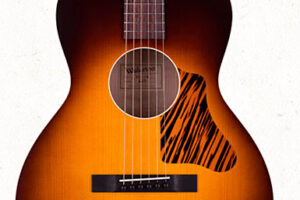
The L-00 Century ships in three nitro finishes: Vintage Sunburst, Vintage Amber, and Ebony. Vintage Sunburst is the one drawing the most praise in independent reviews, and it is the classic L-00 look, the finish most buyers picture when they think of a pre-war Gibson parlor. Vintage Amber is warmer and more understated, a lighter honeyed look that reads more folk than blues. Ebony is the sleeper: a flat black satin that looks dramatically more modern than the other two despite the vintage appointments, and the finish that turns heads on a wall of natural-topped acoustics. All three share identical specs and voice. This is purely an aesthetic decision. One quirk to know: the black satin does show fingerprints and body oils faster than the sunburst.
HOW IT STACKS UP AGAINST THE RIVALS
vs. Gibson L-00 Special ($1,999): the closest in-house comparison and the real buying decision for most people. The Special is a 14-fret L-00 at $300 less. The Century’s 12-fret configuration is the entire difference, and it is not a cosmetic one. If the bloomier, warmer 12-fret voice is what you want, the $300 buys it. If you want the tighter, more controlled 14-fret L-00 sound or you need the upper-fret access, save the money and buy the Special.
vs. Waterloo WL-12 (Collings, ~$2,400): the Waterloo is also a 12-fret small body built around the same design principle of moving the bridge into the sweet spot, but with maple back and sides instead of mahogany, giving it more focus, projection, and front-end attack. Collings build quality and factory setup are legendary, often flawless out of the case. The Gibson brings the name, the mahogany warmth, and dealer support the boutique Waterloo cannot match. Different flavors of the same idea.
vs. Martin 00-size 12-fret: Martin’s small-body 12-fretters lean rounder and warmer, sometimes at the cost of the tight, punchy definition the L-00 delivers. Where the Gibson is snappy and mid-forward, the Martin is smoother and more diffuse. Blues and old-time players tend to prefer the Gibson’s directness; players after a lusher fingerstyle bed often lean Martin.
WHO IT’S FOR
Buy the L-00 Century if you play blues, fingerstyle, ragtime, or solo acoustic material and you value a distinct, intimate voice over raw volume. It is a recording guitar, a couch guitar, a small-room guitar, and a mic’d-up club guitar. It rewards a light touch and a player who listens.
Skip it if you need an unamplified band-volume flat-top. It will disappear in a loud room. If you want a Gibson workhorse that fills a space on its own, the J-45 Century 12-Fret in the same collection is the larger-bodied answer. And if the 12-fret voice does not move you, the L-00 Special saves you $300 for the standard configuration.
GI VERDICT
I have a 1933 Kalamazoo in the collection, so I know what a pre-war 12-fret parlor body does from having one in my hands, not from reading a spec sheet. Gibson got this right. The L-00 Century sounds like a guitar built with intention: tight, present, immediate, with a low-end bloom the 14-fret version simply does not produce. The satin nitro is excellent, and the tweed case is one of the best pieces of included hardware Gibson has shipped with a production acoustic in years. Premier Guitar scored it 4.4, and that tracks with what is here.
The fret-end sharpness at $2,299 is the one real knock, and it should not exist on a guitar at this price. Check yours. Beyond that, if you want a small-body Gibson with a genuine pre-war voice in a new instrument with a warranty and dealer support behind it, this is the one to buy. Expensive, yes. But it earns it.
— GI
START HERE
Free GP Presets →
Grab the Real Deal Blues Pack. Free. No catch.
Newsletter
Weekly guitar and gear news. Sign up in ten seconds.
About
One obsessive guy, a room full of guitars, and straight talk.
Articles
Every review, build, and gear breakdown in one place.
About GI — GuitarIntel’s gear desk. A lifetime of guitars in hand, vintage and new, electrics built from scratch, amps modded, pedals stomped. The first thing I ever wanted, at age 5, was a guitar. Everything since has been in service of that. GuitarIntel exists because gear deserves straight talk from someone who loves guitars and gear and might be a little obsessed.
Published July 4, 2026 — GuitarIntel