Analogwise Pocket Rocket: I Bought the $58 Fuzz Instead of the $300 One
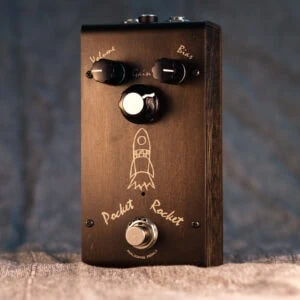
There are two ways to solve the germanium problem. You can engineer it away, or you can lean into it. The Benson Germanium Fuzz does the first and costs about $300. The Analogwise Pocket Rocket does the second and costs about $90. One popped up on Reverb at $58 and I couldn’t walk away from it. Here’s why I bought the cheap one, and why I’d tell you to do the same.
THE GERMANIUM PROBLEM
Germanium transistors sound magic and behave badly. That’s the whole story of germanium fuzz in one sentence. They’re warm, they bloom, they clean up beautifully with your volume knob, and they are notoriously unstable. Temperature moves them. Play an outdoor gig in July and the sun on your pedalboard can turn a great fuzz into a gated mess. Put a buffer in front of one and it can stop behaving entirely. Every germanium fuzz ever built has had to reckon with this.
What makes this particular matchup interesting is that Benson and Analogwise looked at the same flaw and went in exactly opposite directions.
TWO PEDALS, TWO PHILOSOPHIES
| Benson Germanium Fuzz | Analogwise Pocket Rocket Mk. IV | |
| Price | ~$300 | ~$90 (I paid $58) |
| Built In | Portland, Oregon | Warsaw, Poland |
| Transistors | Pair of 2N527 / 2N404 germanium | Two NOS germanium, ~40 years old, from boxes sealed in the late ’70s/’80s |
| Temp Handling | Solid-state thermostat holds transistors at ~100°F; LED goes amber to green at correct bias | None. It drifts. That’s germanium. |
| Controls | Gain, Volume, Impedance | Gain, Volume, Bias |
| Buffer | Class A buffer + passive pickup simulator, works anywhere in the chain | None. Put it first. |
| Warm-Up | 2-3 minutes before it’s right | Plug in and go |
| Philosophy | Engineer the flaw out of it | The flaw is the feature |
The Benson is a genuinely clever piece of engineering and I want to give it its due. That thermostat isn’t a gimmick. Chris Benson set the transistors to work best at roughly the temperature they’d normally be overheating at, then added a heater to hold them there. That’s why it only heats and never cools, hot stage lights and outdoor summer shows stop being a problem instead of becoming one. The impedance knob is the other genuinely useful bit: it simulates rolling back your guitar volume without losing presence, taking the pedal from fuzz to overdrive to nearly clean. Guitar.com called it one of the very best germanium fuzzes they’ve tried and I have no reason to argue.
The Pocket Rocket is one guy in Warsaw with a stash of NOS germanium transistors he unboxes himself from cardboard sealed in the ’70s and ’80s. Three knobs. No buffer, no thermostat, no warm-up. The bias knob is the personality, roll it left and it loses gain and volume but picks up thick, square-wave, dying-battery grit. Roll it right and it cleans up. That’s it. That’s the pedal.
WHY I BOUGHT THE CHEAP ONE
Honest answer first: this popped up on Reverb for a price you can’t walk away from. Fifty-eight dollars. But the price only mattered because of what it did to the math. The Benson is more refined, no argument. What I don’t know is whether that refinement justifies the additional cost, even used. At $58 I could just barely like the Analogwise and still buy the Benson later with no issue. That’s not a compromise, that’s a free look at a whole category.
The other reason is more personal, and it’s about simplicity. I’ve been hanging onto my Musket Fuzz for years specifically because of how tweakable it is. And it never did what I needed for the old-time blues and new blues I actually play. All those options and it still wasn’t the sound. I like that the Analogwise is simpler and more straightforward. Three knobs, two transistors, one idea. Sometimes that’s the whole answer, and the pedal with more knobs is just more ways to not find it. If you’ve read our Beetronics Tuna Fuzz piece you know I have a soft spot for the one-knob philosophy, and this is the same instinct with a bias control bolted on.
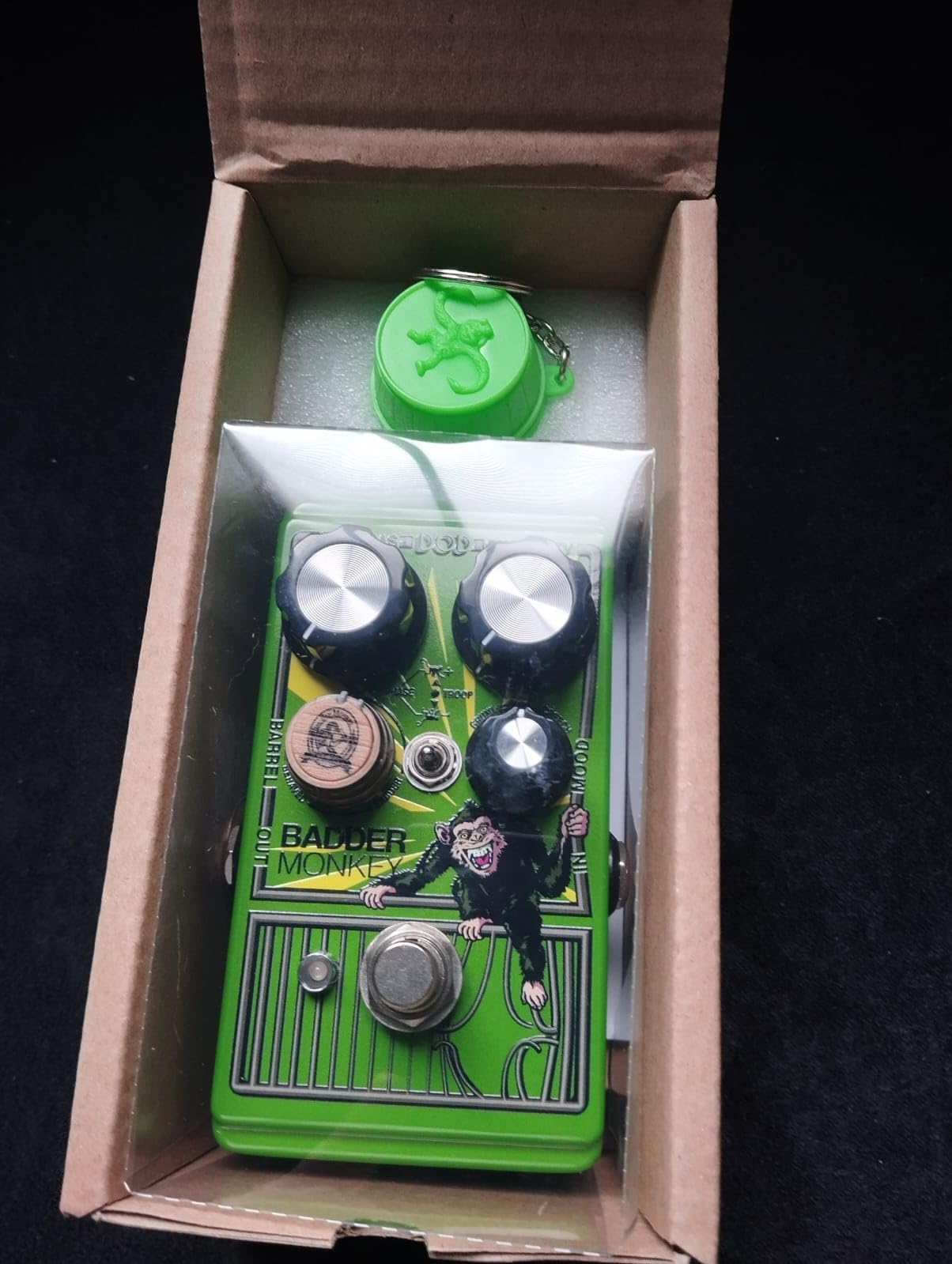
It’s the opposite of the argument I made about the DOD Badder Monkey, where all that blending and tweaking is the entire point and the reason to buy it. Both things are true. Some pedals you want to chase around a room. Some you want to plug in and hear the sound you were already hearing in your head.
HEAR IT FOR YOURSELF
I watched this video three times (and I want that backing track!!!). The price on this was so cheap I just wouldn’t believe it was getting me in the Benson territory.
I have been in a pretty hot band in LA back in the day and if I was going to gig for real I would grab the Benson but this may never see anything but my guitar room floor.
Plus, even thought I think I like complicated, I really like simple better.
Analogwise Pocket Rocket Mk. IV, full demo:
WHICH ONE SHOULD YOU BUY
Buy the Benson if you gig, especially outdoors or under hot lights, and you need a germanium fuzz that behaves the same at 8pm as it did at soundcheck. The thermostat is the actual fix for germanium’s one fatal flaw and nobody else has solved it this cleanly. The buffer and pickup simulator mean you can put it anywhere in a real pedalboard instead of building your chain around it. And the impedance knob is a genuinely great feature for players who live on their volume knob. It’s $300 because it’s solving problems, not because it’s boutique.
Check current price and availability on Amazon.
View on Amazon →
As an Amazon Associate I earn from qualifying purchases.
Buy the Pocket Rocket if you play at home or in rooms where drift doesn’t matter, if you want the unstable, sputtery, dying-battery textures rather than a fuzz that behaves, and if $90 (or $58) for hand-wired NOS germanium sounds like the deal it is. It’s going to drift. For a lot of players that’s not a bug, that’s the sound they’ve been chasing.
And the thing nobody says out loud: at this price gap, they’re not really competitors. You can buy the Pocket Rocket, find out whether you’re actually a germanium person, and buy the Benson later with the information. That’s what I did.
I grabbed mine on Reverb of course but if you want to see the whole lineup and support the building look at his site – so much cool stuff!
https://www.analogwisepedals.com/shop/
FINAL THOUGHTS: KEEP THE ONE THAT WORKS
I’ve been buying pedals since the early 1990s. In that time I’ve sold pedals I should have kept. The first was a Rotovibe I never should have let go, and I’ve thought about it for thirty years.
So here’s the only real advice I have: when you find a pedal that actually does what you want, hang onto it. Your playing style will change. You’ll go through a phase where you’re sure you don’t need it anymore, and you’ll sell it, and it’ll feel like the right call at the time. But if you’re lucky enough to spend decades playing, I can promise you that you will come back around and want it again. I have sold and repurchased the Small Fry three times. Three times. Same pedal, three separate acts of regret, three separate acts of correction, and every time I paid more than I sold it for.
That’s the real cost of pedal churn, and it’s the reason a $58 germanium fuzz is a smarter first move than a $300 one. Not because cheap is better. Because finding out what you actually want is worth more than owning the refined version of something you’re not sure about yet.
— GI
FAQ
What’s the difference between the Benson Germanium Fuzz and the Analogwise Pocket Rocket?
The Benson (~$300, Portland OR) uses a solid-state thermostat to hold its germanium transistors at a constant temperature, plus a Class A buffer and pickup simulator so it works anywhere in your chain. The Analogwise Pocket Rocket (~$90, Warsaw, Poland) is a hand-wired mini fuzz using NOS germanium transistors from the ’70s and ’80s, with no temperature control and no buffer. One engineers the instability out; the other embraces it.
Why do germanium fuzz pedals drift with temperature?
Germanium transistors are physically sensitive to heat in a way silicon transistors aren’t. As temperature rises, their bias and gain shift, which changes how the fuzz sounds and responds. That’s why an old germanium fuzz can sound great indoors and fall apart at an outdoor gig in direct sun.
How does the Benson’s temperature control actually work?
It uses a solid-state thermostat with a heating element that holds the germanium transistors at roughly 100°F. An LED changes from amber to green when correct bias and hFE are reached. It only heats and never cools, because Benson deliberately biased the transistors to perform best at the temperature they’d otherwise be overheating at. It needs about 2-3 minutes to warm up.
What does the bias knob on the Pocket Rocket do?
Turned counterclockwise, it starves the circuit, losing some gain and volume but adding thick, square-wave, dying-battery grit. Turned clockwise, it cleans up and gains output. Think of it as a second gain control that changes the character rather than just the amount.
Can you use a germanium fuzz after a buffer?
Traditionally no, germanium fuzzes want to see your guitar’s pickups directly, which is why they go first in the chain. The Benson works around this with a built-in Class A buffer and a passive pickup simulator, so it can go anywhere. The Pocket Rocket has no buffer, so put it first.
Is a cheap germanium fuzz worth it?
If you’re finding out whether germanium is for you at all, absolutely. At $58 to $90, a hand-wired NOS germanium fuzz costs less than a fifth of a boutique one, and it tells you what you actually want before you spend $300 finding out.
About GI — GuitarIntel’s gear desk. Decades of guitars in hand, vintage and new, electrics built from scratch, amps modded, pedals stomped. The first thing I ever wanted, as a kid, was a guitar. Everything since has been in service of that. GuitarIntel exists because gear deserves straight talk from someone who loves guitars and gear and might be a little obsessed.
Published July 16, 2026 — GuitarIntel