RhPf Regista Midfield Maestro — A Rupert Neve Console EQ in a Pedal
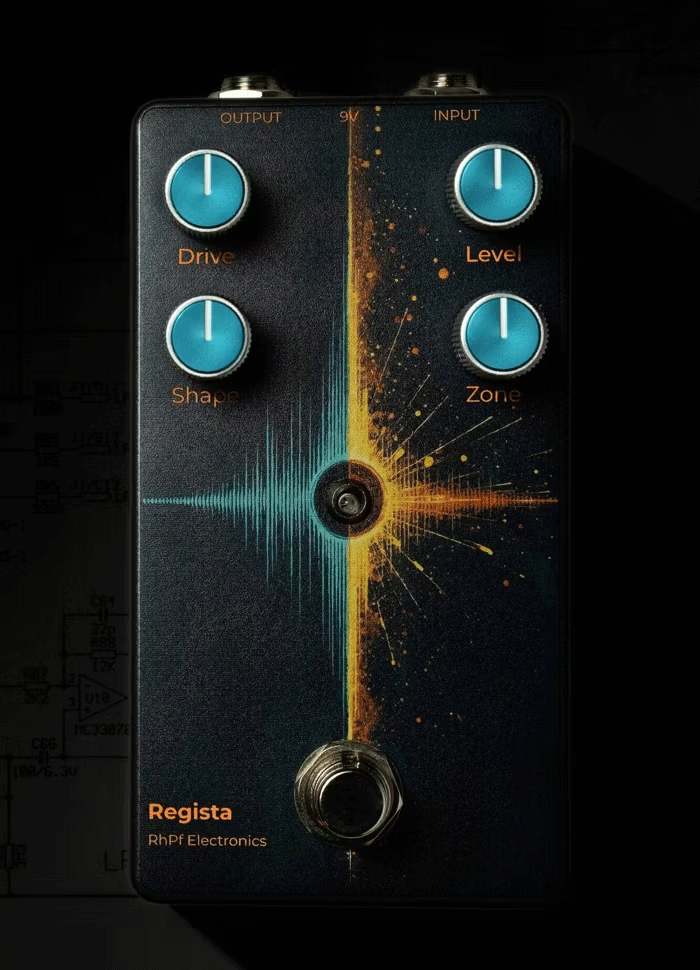
Nobody makes a boutique parametric mid EQ pedal. That is what makes the RhPf Regista Midfield Maestro worth your attention. Swiss builder RhPf Electronics has taken the parametric midrange section from the Rupert Neve-designed AMEK Mozart MZ15-RN console, the desk that recorded Buena Vista Social Club, and put it on the floor in a single-knob-per-function pedal with surgical precision. It is $339, it is not a clone of anything you already own, and it does something almost no other guitar pedal does. Street price: $339 USD / £249 / €289 / CHF 249.
Available direct from RhPf Electronics.
SPEC SHEET
| Model | RhPf Electronics Regista Midfield Maestro |
| Type | Studio-grade single-band parametric mid EQ pedal |
| Inspiration | AMEK Mozart MZ15-RN (Rupert Neve-designed) parametric mid section |
| Drive | Frequency level cut/boost, ±18 dB, center-detented |
| Level | Master output, ±18 dB, center-detented |
| Shape | Q / bandwidth control (narrow surgical to wide musical) |
| Zone | Frequency sweep, 100 Hz to 10 kHz |
| Components | Custom green-base potentiometers for precision tapers; custom blue-topped knobs mirroring the Mozart console |
| Build | Handmade in Basel, Switzerland; 100% original circuit (no clone, no mod) |
| Availability | Direct from RhPf Electronics webstore |
| Street Price | $339 USD / £249 / €289 / CHF 249 / $459 CAD / $479 AUD |
WHAT A PARAMETRIC EQ ACTUALLY DOES
Most guitar EQ pedals are graphic EQs: a row of sliders at fixed frequencies, boost or cut, that is it. A parametric EQ is a fundamentally different tool. It gives you three independent controls over a single band: which frequency you are targeting, how wide or narrow that target is, and how much you boost or cut it. That means instead of nudging a preset slider and hoping, you can find the exact frequency causing a problem and surgically remove it, or find the exact frequency that makes your guitar sing and lift only that.
On the Regista, those three controls are named after football rather than audio, because the builder has a sense of humor. Zone sweeps the frequency from 100 Hz to 10 kHz. Shape sets the Q, the bandwidth, from a razor-thin notch to a broad, musical curve. Drive is the cut or boost at that frequency, ±18 dB, with a center detent so you can always find flat by feel. Level is your master output, also ±18 dB and center-detented, so you can use the pedal as a clean boost or match unity gain after a big cut.
That ±18 dB range is worth pausing on. The original AMEK Mozart’s parametric mids offered ±14 dB. The Regista gives you more range than the console it is named after, and reviewers who have measured it report it outperforms the original’s actual real-world resolution, which was reportedly narrower than the manual claimed.
THE RUPERT NEVE CONNECTION
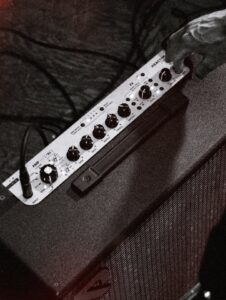
Here is the part that makes this more than a boutique curiosity. RhPf’s builder, Thomas, is a working sound and studio engineer, and he spent real time with a 56-channel AMEK Mozart MZ15-RN, the last great console Rupert Neve had a hand in designing. Neve’s own introduction to the Mozart manual described the modules as embodying equalization “virtually identical” to his classic designs, with the same attention to signal path quality, built around his TLA (Transformer-Like-Amplifier) principle.
The Mozart landed in 1993, right as the industry was flipping from analog to digital, which is why it never got the worship the earlier Neve 1073 and 1081 units did. But it made records. Buena Vista Social Club, a Grammy winner in 1998, went through a Mozart. The desk’s parametric mid sections (MF1 and MF2 on the original) are the specific circuit that inspired this pedal. Thomas did not clone them, RhPf’s whole identity is original circuits, no clones, no mods, but he chased that behavior with custom components: custom-taper green-base potentiometers for precision, and custom blue-topped knobs that deliberately mirror the ones on the Mozart’s control strips.
The name is the other half of the joke. A regista is the deep-lying playmaker in Italian football, the midfield maestro who controls the game from the center without ever being the loudest player on the pitch. Andrea Pirlo is the archetype. Zone and Shape come from the same football vocabulary. It is a pedal named after a midfielder, that controls the midrange. That is either insufferable or perfect depending on your tolerance for a pun, but it tells you exactly what the pedal is for.
WHAT YOU’D ACTUALLY USE IT FOR
This is not a tone-shaping toy, it is a problem-solving tool, and there are specific jobs it does that nothing else on your board can:
Killing the honk. Every guitar and cab combination has a frequency that turns ugly when you push it, usually somewhere in the 800 Hz to 2 kHz range. With a graphic EQ you are guessing. With the Regista you sweep Zone until you find the exact offender, narrow Shape to isolate it, and cut only that. The rest of your tone stays untouched.
Cutting through a mix. The opposite move. Find the frequency where your guitar sits in the band’s arrangement, widen Shape slightly, boost a few dB, and you gain presence without turning up. Every engineer knows the trick; a parametric on the floor lets you do it live.
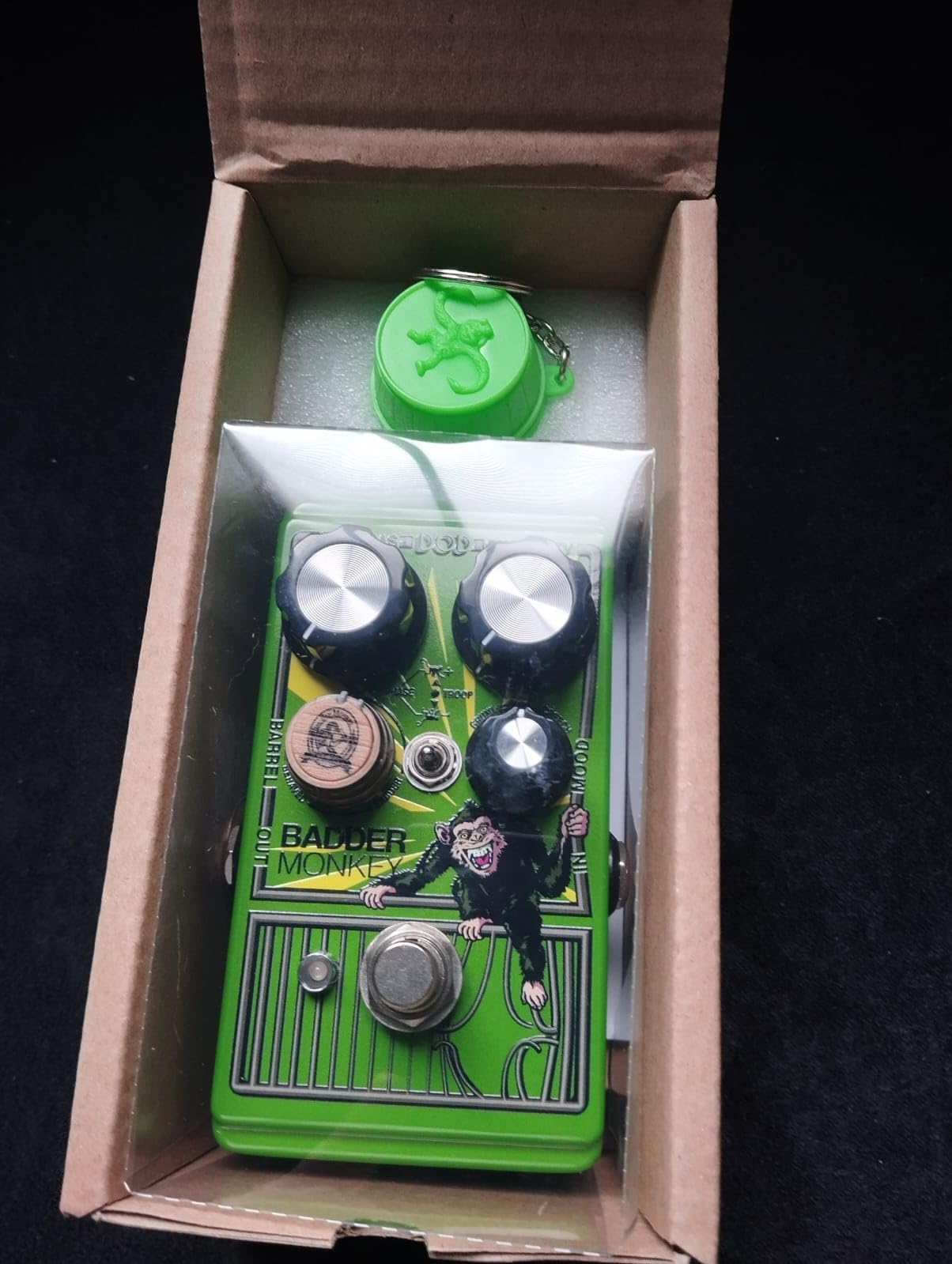
Reshaping a drive pedal. Stack it after an overdrive and you can re-voice the whole thing. A mid-heavy Tube Screamer becomes flatter and more open; a scooped fuzz gets its mids back. This is a genuinely different result than what you get from the tone knob on the Badder Monkey or any single-knob drive, because you are choosing the frequency, not accepting the builder’s choice.
Taming an acoustic or a piezo. Piezo quack lives in a narrow, findable band. A parametric is the correct weapon for it, and most players fight that battle with a graphic EQ that cannot get narrow enough.
As a clean boost. With Drive at the detent and Level up, it is a transparent output boost with the option to add a little targeted color when you want it.
HOW IT COMPARES
vs. a graphic EQ (Boss GE-7, MXR 10-band): not the same category. A graphic EQ gives you fixed frequencies at a fixed Q. The Regista lets you choose the frequency and the width. A GE-7 is $100 and does a broad job; the Regista is $339 and does a precise one. If your problem is “I want more mids,” a graphic EQ is fine and cheaper. If your problem is “there is one specific frequency ruining this,” only a parametric solves it.
vs. the EQ in a modeler: units like the Valeton GP-180, the Quad Cortex, and the Helix all have parametric EQ blocks buried in the menus, and they are capable. The difference is entirely workflow and signal path: the Regista is analog, always-on-the-floor, and you adjust it with your hands in real time instead of scrolling a touchscreen. If you already run a modeler, you arguably have this function. If you run an amp and pedals, you do not.
vs. a rack or studio parametric: that is the actual comparison RhPf is inviting, and it is bold. Well-maintained vintage parametric EQs command thousands. The Regista is asking $339 to get you into that tool category in a pedal enclosure, from a builder who actually engineered on the console in question.
WHO IT’S FOR
Buy the Regista if you understand what a parametric EQ does and have wanted one on the floor instead of in a rack or a menu. It is for the player who has spent real time fighting a specific frequency, the one who records and mixes their own stuff, the one running an amp-and-pedals rig who wants studio-grade surgical control without a modeler. It is also for anyone chasing the Neve lineage honestly rather than through a plugin.
Skip it if you do not already know which frequency is bothering you. A parametric EQ is a scalpel, and a scalpel in untrained hands is worse than a butter knife. If your instinct is “I just want more mids,” a $100 graphic EQ does that job and you keep $239. Also skip it if you already run a modeler with a parametric block you have never opened, you own this function and are not using it.
GI VERDICT
The Regista Midfield Maestro is the rare boutique pedal that is not chasing anybody. It is not another Klon, not another Tube Screamer variant, not another fuzz with a clever name. It is a studio tool nobody else is building for guitar players, made by someone who actually engineered on the console that inspired it, with custom components chosen for taper precision rather than looks. The ±18 dB range beating the original Mozart’s ±14 dB is not marketing, it is the kind of detail that tells you the builder cared about the thing rather than the story.
At $339 for a single-band EQ, it is a real ask, and it will lose every spec-sheet argument against a $100 graphic EQ from a player who does not know why they are different. That is fine. This is not a pedal for that player. For the ones who have chased a frequency around a room for an hour and known exactly what tool they were missing, this is that tool, on the floor, with a detent so you can always find your way home.
— GI
FAQ
What is the RhPf Regista Midfield Maestro?
It is a studio-grade single-band parametric mid EQ pedal handmade in Basel, Switzerland by RhPf Electronics, inspired by the parametric midrange section of the Rupert Neve-designed AMEK Mozart MZ15-RN console. Street price is $339 USD.
What is the difference between a parametric EQ and a graphic EQ?
A graphic EQ offers boost and cut at fixed frequencies with a fixed bandwidth. A parametric EQ lets you choose the exact frequency, set how wide or narrow that band is (the Q), and then boost or cut it. Parametric is surgical; graphic is broad.
What is the Regista’s frequency range?
The Zone control sweeps from 100 Hz to 10 kHz. Drive provides ±18 dB of cut or boost at the selected frequency, and Level offers ±18 dB of master output, both center-detented.
Is it a clone of the AMEK Mozart EQ?
No. RhPf Electronics builds only original circuits, no clones or mods. The Regista is inspired by the Mozart’s parametric mid behavior, and its ±18 dB range actually exceeds the original console’s ±14 dB.
Where can I buy the Regista Midfield Maestro?
Direct from the RhPf Electronics webstore. Pricing runs $339 USD, £249, €289, CHF 249, $459 CAD, or $479 AUD.
Why is it called Regista?
A “regista” is the deep-lying playmaker in Italian football, the midfield maestro who controls the game from the center. Andrea Pirlo is the archetype. The Zone and Shape control names come from the same football vocabulary. The pedal controls the midrange; the name is the joke.
About GI — GuitarIntel’s gear desk. Decades of guitars in hand, vintage and new, electrics built from scratch, amps modded, pedals stomped. The first thing I ever wanted, as a kid, was a guitar. Everything since has been in service of that. GuitarIntel exists because gear deserves straight talk from someone who loves guitars and gear and might be a little obsessed.
Published July 15, 2026 — GuitarIntel