Valeton GP-180 — Full Specs, Street Price, and What It Actually Does
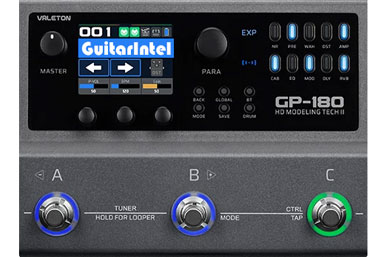
The Valeton GP-180 is a compact stereo multi-effects processor and amp modeler announced at NAMM 2026 and built on Valeton’s second-generation HD Modeling Tech II engine — the same DSP core as the GP-200 — in a smaller, battery-powered body with 10 dedicated per-effect block controls that change how you interact with the unit live. Street price: $179.99.
SPEC SHEET
MODEL — Valeton GP-180
TYPE — Multi-FX / Amp Modeler / IR Loader / NAM
ENGINE — HD Modeling Tech II, 48kHz / 24-bit
EFFECTS — 200+ effects, up to 12 simultaneous blocks
PRESETS — 200 patches (100 factory / 100 user)
IR SLOTS — 20 user slots (1024 / 2048 point)
NAM / SNAPTONE — 50 curated factory files, up to 100 total
LOOPER — 180 seconds stereo
DRUM MACHINE — 100+ built-in patterns
DISPLAY — 2.4-inch color LCD
FOOTSWITCHES — 3 main + 10 dedicated effect block buttons
BATTERY — 3000 mAh Li-ion / 6+ hours (brightness level II)
USB AUDIO — 6-in / 4-out, 24-bit / 48kHz (Win/Mac/iOS/Android)
MIDI — TRS MIDI in/out, USB MIDI, Bluetooth MIDI
OUTPUTS — Stereo balanced TRS L/R, headphone / TRRS
POWER — USB-C bus power or 9V DC 2A, fast charge supported
SIZE / WEIGHT — 181 x 139 x 52 mm / 843g
STREET PRICE — $179.99
WHAT IT DOES
The Valeton GP-180 runs the HD Modeling Tech II engine at 24-bit / 48kHz — a meaningful upgrade from the 44.1kHz of the GP-5 and GP-50 generation. The freely reorderable signal chain supports up to 12 simultaneously active effect modules drawn from a library of 200+ effects covering amp simulations, cabinet IR loading, NAM neural amp captures, drives, modulation, delay, reverb, pitch effects, EQ, wah, compression, and more. DSP resources are percentage-based — amp models run around 14%, cabinet sims around 22% — leaving solid headroom for a full signal chain even with amp and cab modeling engaged.
The 10 dedicated per-effect block buttons on the right panel are the feature that separates the GP-180 from everything else at this price point. They give you direct access to any effect block in your chain without scrolling through menus. That kind of immediate hands-on control is typically reserved for units costing two or three times the price.
AMP MODELING
The amp and cabinet simulations on the GP-180 are the strongest in Valeton’s compact lineup. The HD Modeling Tech II architecture delivers noticeably more realistic amp response than the GP-5 and GP-50 — more dynamic, more touch-sensitive, closer to the feel of running into a real amp. Clean Fender-style voicings, British crunch, American high-gain, modern scooped metal — all represented and all usable in a real mix. Cabinet choice can be globally linked to the amp simulation or decoupled entirely, letting you mix and match amp models with third-party IRs for a completely custom sound.
Drive and overdrive processing is convincing across the board. Classic green overdrive, blues-style mid-push, high-gain saturation — all sit well in a real mix. Effects like the Tube Spring reverb are rich but DSP-heavy at around 22%, so chain planning matters on complex patches.
NAM AND IR LOADING
NAM (Neural Amp Modeler) support via Valeton’s SnapTone technology is the headline feature for tone-obsessed players. The unit ships with 50 curated SnapTone captures and stores up to 100 total. Third-party IR cabinet loading fills 20 user slots at 1024 or 2048 sample point resolution. The combination of a good NAM capture and a good third-party IR at 48kHz produces tones that compete with units like the Neural DSP Quad Cortex and the ToneX at a fraction of the price. The GP-180’s cab IR implementation is noticeably cleaner and more open-sounding out of the box than the GP-200.
Important: GP-200 presets are not compatible with the GP-180. Valeton confirmed this directly — the firmware architecture is different. Build your patches from scratch on the GP-180.
INPUTS, OUTPUTS AND CONNECTIVITY
The GP-180 outputs stereo balanced TRS left and right plus a headphone / TRRS combo jack. No XLR — that is the key trade-off vs the GP-200 for live players running direct to PA. The USB-C port doubles as a 6-in / 4-out audio interface at 24-bit / 48kHz on Windows, Mac, iOS, and Android. MIDI is covered three ways: TRS in/out, USB MIDI, and Bluetooth 5.0 MIDI for wireless control from a phone or tablet. The same USB-C port can power other devices — useful for the busker or fly-rig player running the whole setup off a single battery pack.
BATTERY
The 3000mAh Li-ion built-in battery delivers 6+ hours of runtime at screen brightness level II — enough for soundcheck, warm-up, and a full show on a single charge. Power options: internal battery, USB-C bus power from any power bank or laptop, or a standard 9V DC 2A supply. Fast charge supported via USB-C. For a fly-date rig or practice setup where leaving a power supply at home means one less thing to forget, the battery alone justifies the GP-180 over any amp modeler that requires a wall outlet.
GP-180 VS GP-200: WHAT YOU ACTUALLY GIVE UP
The GP-200 is Valeton’s flagship — bigger chassis, XLR outputs, built-in expression pedal, more amp and effects models, and a larger display. The GP-180 runs the same HD Modeling Tech II engine but trades XLR outputs, the expression pedal, and one footswitch for a smaller footprint, a built-in battery, and the 10 dedicated block buttons the GP-200 does not have. The blind tone test below has surprised players who assumed the flagship would win every comparison.
WHO IT’S FOR
The GP-180 is for players who want GP-200-level sound quality without the GP-200’s size, price, or power supply requirement. It is the right call for home recording, rehearsal, fly-date rigs, and any situation where battery power or pedalboard real estate matters. If you gig through a PA and need XLR outputs or a built-in expression pedal, the GP-200 is still your unit. If you spend more time in the studio or rehearsal room than the stage, or if the 10 direct-access block buttons matter more to you than an onboard expression pedal, the GP-180 makes a compelling case at $179.99.
GI VERDICT
I own most of the GP lineup. What might pry me off my GP-200 is the GP-180’s built-in cab IRs, noticeably better out of the box, cleaner captures that make the unit sound more open without loading a single third-party IR. Sound-wise these two are very close. The GP-200 still offers more models and effects, so it’s tight. But the GP-180 is battery powered and I have to admit I love that option. The labeled module buttons are a big win too, much easier to navigate live. Owning both is always an option.
— GI
About GI — GuitarIntel’s gear desk. Fifty years of guitars in hand, vintage and new, electrics built from scratch, amps modded, pedals stomped. The first thing I ever wanted, at age 5, was a guitar. Everything since has been in service of that. GuitarIntel exists because gear deserves straight talk from someone who loves guitars and gear and might be a little obsessed.
Published June 29, 2026 — GuitarIntel