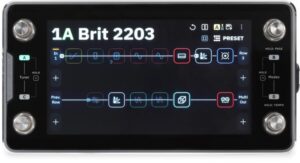
Positive Grid Reactor Review — The AI Amp Taking Aim at the Katana
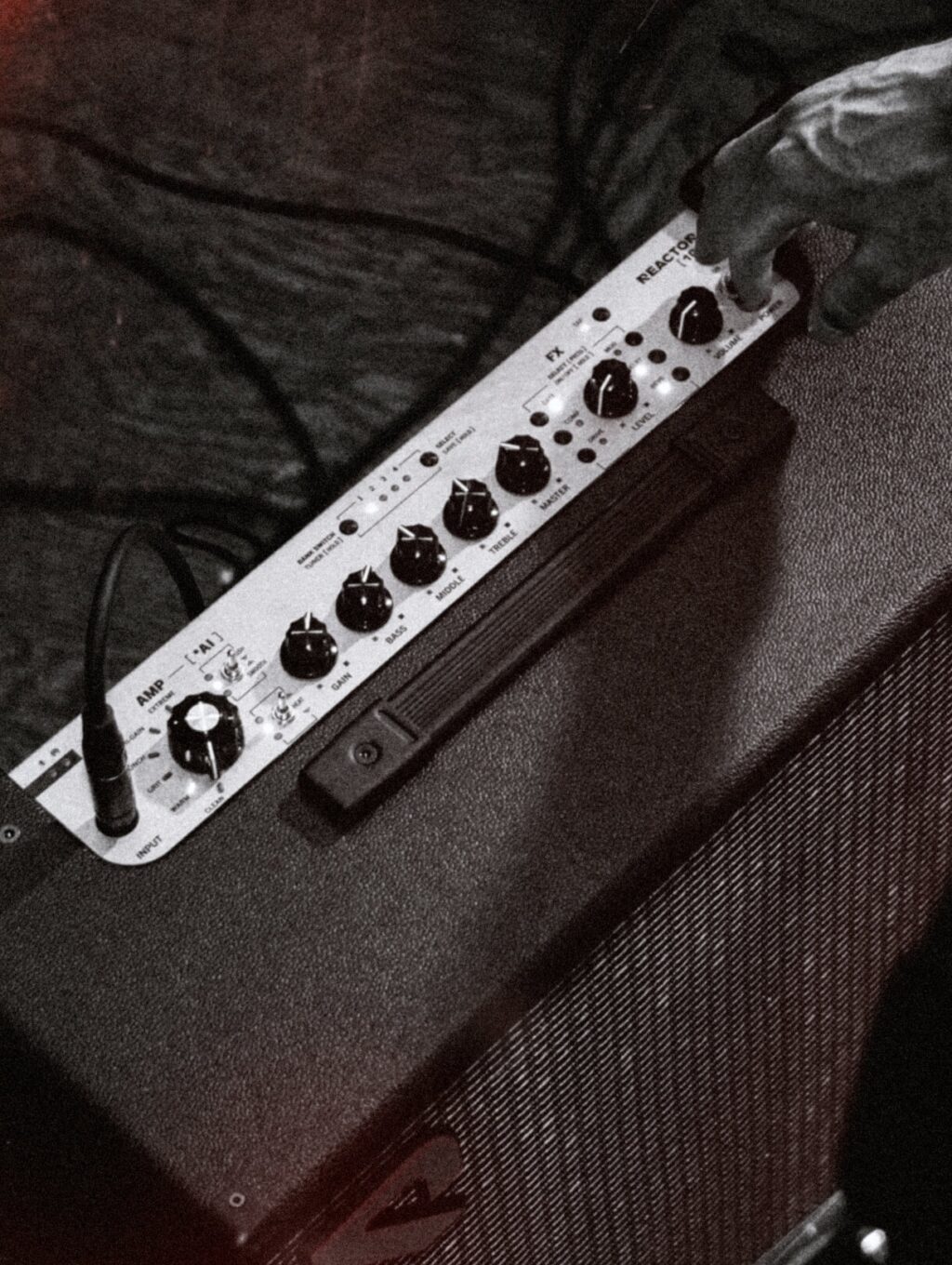
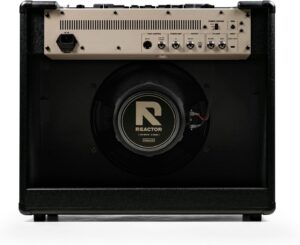
The Positive Grid Reactor is the first guitar amp that builds tone from a sentence. Type “warm 60s Fender clean with a touch of spring,” or upload a photo of a pedalboard, or drop in an audio clip, and its Amp Intelligence engine builds the signal chain for you. Under the AI headline is something more grounded: a real wood-cabinet 1×12 combo trained on over 200 amp designs at the circuit level, aimed squarely at the amp everyone calls the one to beat, the Boss Katana. Street price: $349 (50W) / $449 (100W).
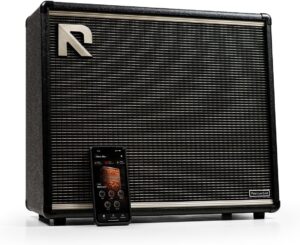
Check current price and availability on Amazon.
View on Amazon →
As an Amazon Associate I earn from qualifying purchases.
See full specs at the Positive Grid Reactor product page.
SPEC SHEET
| Model | Positive Grid Reactor 50 / Reactor 100 |
| Type | 1×12 intelligent modeling combo amp |
| Engine | Amp Intelligence, circuit-level modeling of 200+ amps |
| Power | 50W or 100W, selectable |
| Power Modes | 50: 50/25/1W | 100: 100/25/1W |
| Speaker | Custom 12 inch (50: 4Ω | 100: 8Ω) |
| Cabinet | Wood, custom black/silver grille |
| Amp Models | 24 factory amps |
| Effects | 27 onboard, up to 8 simultaneous |
| Presets | 24 factory, 8 quick-access slots |
| Tone Creation | Text, image, and audio to tone via app |
| Connectivity | USB-C audio interface, Bluetooth, MIDI, FX loop, line out with cab sim, power amp in, headphone out |
| Updates | Wi-Fi OTA |
| Footswitch | Reactor Control, 6 buttons, wired/wireless (sold separately, $149) |
| Weight | 50: 23.6 lb | 100: 30.6 lb |
| Street Price | $349 (50W) / $449 (100W) |
WHAT AMP INTELLIGENCE ACTUALLY IS
Strip the marketing and here is the real thing. Positive Grid trained a tone engine by going deep on 200-plus amp designs at the circuit level, decoding gain stages, transformers, bias points, and harmonic behavior rather than just sampling how the amps sound. The payoff you feel is dynamic, touch-sensitive response instead of the static, one-dimensional feel that sinks a lot of budget modelers. Multiple reviewers who came in skeptical, including one who has played 30 years, walked away saying it genuinely feels alive under the fingers.
The AI layer sits in the app. Text to Tone: describe a sound in plain language and it builds a chain, then responds to conversational tweaks like “add compression” or “less gain.” Audio to Tone: upload a clip, isolated guitar or full mix, and it reverse-engineers the tone. Image to Tone: photograph an amp or pedalboard and it generates a matching preset. It is a real feature set, not a gimmick, and it is the reason this amp is getting written up everywhere.
THIS IS NOT A SPARK
Positive Grid built its name on the Spark practice-amp family, and the Reactor is a deliberate step away from that. The Spark was a bedroom amp with a full-range flat-response speaker. The Reactor is a stage and studio amp with a real custom-voiced 12 inch guitar speaker in a sturdy wood cabinet, closer in feel to a Fender Deluxe than to a desktop practice box. The control layout is deliberately conventional too: gain, three-band EQ, effects, volume, an amp-select knob with Push/Smooth and Heat switches. No touchscreen, no menu diving. You can ignore the AI entirely and run it like a normal amp, which is exactly the right design call.
Selectable wattage is the sleeper feature. Both models run at full power, 25W, or 1W, and crucially they hold their character at all three. Most amps turn thin and lifeless when you dial them down. The Reactor sounds like itself in a bedroom at 1W and on a stage at full tilt, which for a modern player bouncing between rehearsal, home, and gig is worth more than any AI trick.
TONE AND FEEL
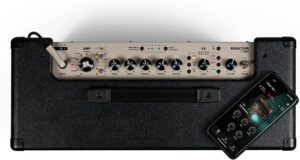
The consensus from hands-on reviews is consistent: the core amp sounds excellent. Popular Science called it one of the most fun pieces of guitar tech in years. Guitar World, reviewing the 100W, described it as receptive, balanced, and warm, and singled out the modeling amp tones as exceptional. The 100W in particular is a genuinely loud, full 100-watt combo that will rattle windows well before it runs out of headroom, this is not Bluetooth-speaker loud, it is real amp loud.
There is a real limit worth knowing. The AI tone-matching struggles with anything built on a proprietary algorithm. Ask it to recreate a Strymon BlueSky or a wash of stacked reverbs and delays and it falls short, because those live outside what circuit-level modeling can capture. For amp-and-drive tones it is strong. For exotic ambient soundscapes, keep your dedicated pedals. If you want a comparison in the pure multi-fx lane, the Valeton GP-180 is the pedal-format take on the same idea.
THE APP IS THE WEAK LINK
Every honest review lands on the same knock: the app is a work in progress. MusicRadar was blunt, a killer-sounding, road-tough amp hampered by a clunky AI app that is brilliant in flashes but not the revolution it wants to be. The Text-to-Tone results are inconsistent, the interface is not the most intuitive, and the AI-generated art inside the app is, by more than one account, an eyesore. None of this touches the sound of the amp itself. But if you are buying the Reactor specifically for the AI experience rather than the tone, temper expectations. The hardware is finished. The software is still cooking.
REACTOR VS BOSS KATANA
Every modeling combo in this class gets measured against the Boss Katana, and for good reason, it is the gold standard and the reason the phrase “Katana killer” exists. Here is the honest split. The Katana 100 Gen 3 (around $449 to $499) wins on interface maturity and Boss’s decades of tonal refinement, it is dead simple, rock solid, and does exactly what you expect every time. The Reactor matches or beats it on raw tone and blows past it on features: USB-C audio interface, Bluetooth, the full text/image/audio tone-creation suite, and OTA updates that mean it gets better over time.
The decision comes down to temperament. If you want a proven, no-surprises workhorse you plug in and trust, the Katana is still the safe pick. If you want the better-sounding, more connected, more future-facing amp and you can live with app growing pains while Positive Grid iterates, the Reactor is the more exciting buy at the same money.
50 OR 100: WHICH TO BUY
Both models are identical in features, models, effects, and the entire AI feature set. The only difference is power and size. The Reactor 50 ($349, 23.6 lb) leans into feel and immediacy and is plenty for home, studio, and small rooms. The Reactor 100 ($449, 30.6 lb) gives you more clean headroom, punch, and projection for louder rehearsals and full-band gigs. If you play out with a drummer, get the 100. If you are primarily home and studio, the 50 saves you $100 and 7 pounds with zero feature compromise.
GI VERDICT
The Reactor is the most interesting amp release of the year, and the interesting part is not the AI. It is that Positive Grid built a genuinely great-sounding, well-made, stage-ready combo and then bolted a wild tone-creation engine on top of it. Buy it for the amp, treat the AI as a bonus that will get sharper with every OTA update, and you will be happy. Buy it purely for the AI and you may hit the app’s rough edges before Positive Grid smooths them.
At $349 for the 50 and $449 for the 100, it is priced right on top of the Katana and beats it on tone and features. The app is the one thing holding it back from a clean win, and it is the one thing most likely to improve. This is the amp I would tell a friend to watch closely, and at this price, the one I would tell them to just buy. The footswitch being a $149 add-on is the only pricing sting, budget for it if you gig.
— GI
Check current price and availability on Amazon.
View on Amazon →
As an Amazon Associate I earn from qualifying purchases.
About GI — GuitarIntel’s gear desk. Decades of guitars in hand, vintage and new, electrics built from scratch, amps modded, pedals stomped. The first thing I ever wanted, as a kid, was a guitar. Everything since has been in service of that. GuitarIntel exists because gear deserves straight talk from someone who loves guitars and gear and might be a little obsessed.
Published July 5, 2026 — GuitarIntel